How Much Is a 2 Week Trip to Africa? A Real Breakdown
How much is a 2 week trip to Africa? Real 2026 numbers: budget, mid range and luxury, from park fees to gorilla permits — and what I'd actually pay for each.

So you've opened seventeen tabs, three of them are safari operators quoting numbers that don't match, and you still don't know how much is a 2 week trip to Africa going to cost you. I get it. I've been the person doing that maths at midnight.
Here's the short answer, before I make you scroll: a two week trip to Africa runs roughly $500 to $15,000+ per person, not counting your international flights. Budget end, you're camping, staying in one of the amazing hostels and sharing a vehicle. Top end, you're being flown between luxury tented camps with a private guide and a plunge pool. Most first-timers land somewhere in the comfortable middle.
That's the range. Now let's talk about what actually moves the number, because "it depends" is a useless answer and you deserve better.
What actually decides your 2 week trip to Africa cost
Three things, mostly. Where you go, how you sleep, and also when you travel.
Where. East Africa (Kenya and Tanzania is THE classic African safari combo) costs more than Southern Africa, largely because of conservation fees. The park entry fees in the Serengeti and Ngorongoro Conservation Area are genuinely steep, and there's no way around them. South Africa, thanks to a friendly exchange rate, is one of the most affordable safari destinations on the continent, and a great first African safari if the budget's tight.
How. Your travel style is the single biggest lever. Same wildlife, wildly different bill. A budget camping trip and a luxury fly-in safari can both put you next to the same elephant. The only difference: One of you paid ten times more for this kind of luxury travel.
When. High season (roughly June to October, plus the December holidays) is when the Great Migration crosses the Maasai Mara and everyone wants a bed. Low season and the so-called shoulder season (which is in April, May, November) and prices drop, sometimes a lot. The bush is greener, the animals are still there, and you'll have space to breathe.
African safari cost by travel style: the three tiers
I'm going to give you real 2026 per-person ranges for a two week African safari, excluding international flights. These hold up across Kenya and Tanzania, the two countries most people build their trip around.
Budget safaris: $800 to $3,000 per person
Shared vehicles, public campsites or basic lodges, group departures. You see the same Serengeti, you just sleep under canvas and eat simpler. For solo travelers this is actually the sweet spot — group safaris split the vehicle cost, so you're not paying a single supplement on a private truck. Budget lodging runs about $150 to $300 a night once you factor in the safari setup.
For a 2-Day Tarangire & Ngorongoro Fly in from Zanzibar it will roughly cost you around $894; flights and tipps not included. What is included are the park fees, all transportation and much more. Click here, to check details. Note: You cannot participate as a solo traveller, so it makes sense to look for a safari or travel buddy at your accommodation or via social media to join.
Solo traveller approved: For a 1-Day Pilanesberg Safari in South Africa on the other hand, it will cost you roughly around $294 to $310. Everything is included here, other than tipps & Accommodation before and after the safari. Click here, to see all details.
Mid range safaris: $3,000 to $8,000 per person
This is the popular one, and honestly the one I'd point most people toward. Comfortable mid range lodges and permanent tented camps, smaller groups, better guiding, the odd internal flight to skip a brutal drive. Mid range lodges sit around $300 to $700 per night. A mid range family safari for four lands somewhere around $10,000 to $25,000 total depending on how fancy you get — more on families in a second. If you want a mid range family safari with child friendly lodges and a driver who's good with kids, tell your operator upfront; the good ones plan around it.
Luxury safaris: $8,000 to $15,000+ per person
Luxury lodges, luxury tented camps, private transfers, gourmet dining, full board meals, sometimes a hot air balloon over the plains at dawn. Luxury accommodations start around $700 a night and climb past $1,500 fast. At the very top, ultra-luxury camps in the most exclusive corners run over $2,500 per person per day. This is the honeymoon-and-photographers tier. If money genuinely doesn't sting, it's spectacular. If it does sting, the wildlife does not know the difference.
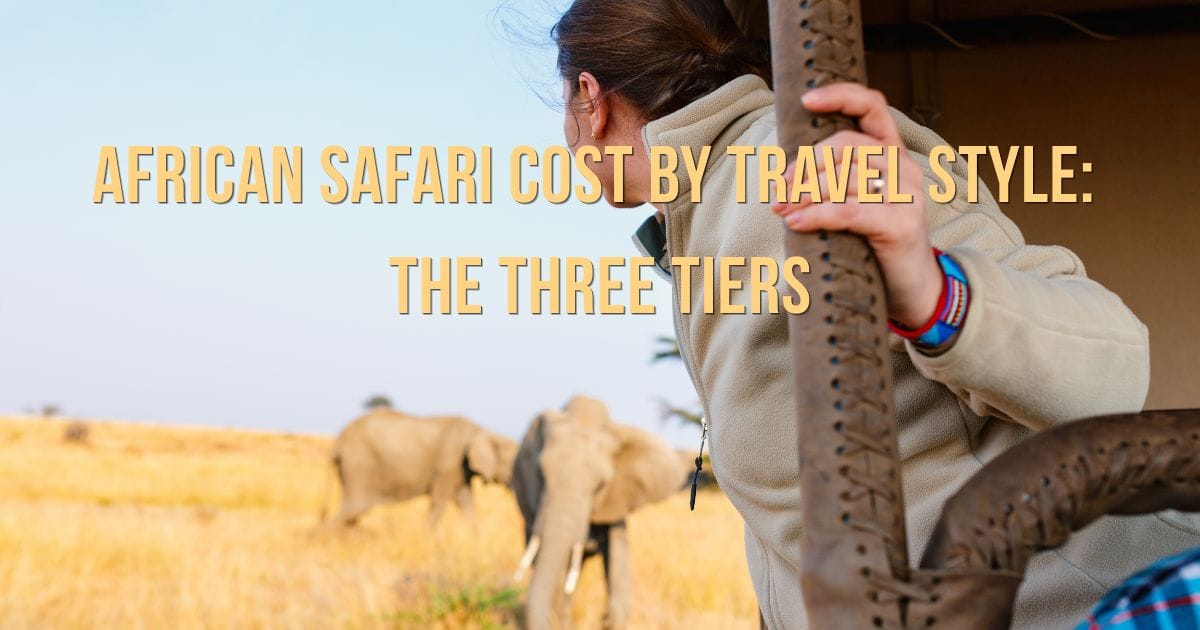
Same elephant. Same sunrise. The only thing your money buys past mid range is thread count.
Park fees: the cost nobody warns you about
Let's talk park entry fees, because they're baked into your package price and they're a bigger chunk than you'd think.
National park fees across East Africa's key parks generally run $30 to $100 per person per day, sometimes more. Tanzania's conservation fees for the Serengeti and Ngorongoro Crater sit around $53 to $83 a day. The Maasai Mara National Reserve charges per entry, which is why guides plan game drives to make each entry count. Amboseli National Park, Lake Nakuru, Tarangire National Park — all have their own daily conservation fees, and they add up across a two week itinerary.
This is exactly why a budget safari isn't as cheap as you'd hope and a luxury one isn't purely about the lodge. Everyone pays the same park fees. It's the one line on the invoice that doesn't care how rich you are.
Gorilla trekking: the big optional add-on
If mountain gorillas are on your list — and for a lot of people planning East Africa, they are — this is a separate, significant cost, so I'm giving it its own section.
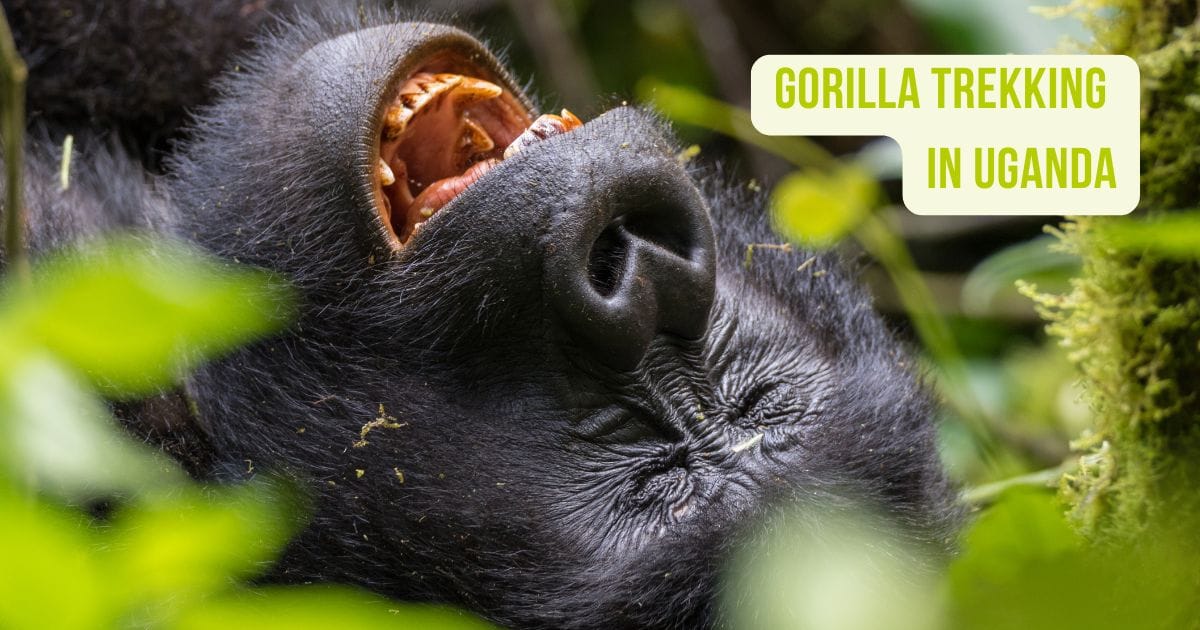
A private gorilla trekking tour is built around the permit, and the permit is fixed by the government. In 2026, a gorilla trekking permit costs $800 per person in Uganda (that's Bwindi Impenetrable National Park, or "Impenetrable National Park" as people search it) and $1,500 per person in Rwanda (Volcanoes National Park). Uganda drops to $600 in the low-season months of April, May and November. That's one hour with a habituated gorilla family, plus your guide and trackers.
Add the lodge, transport and airport transfers on top, and a short gorilla trekking trip runs roughly $2,400 to $7,000 per person depending on country and comfort level. Chimpanzee trekking is a cheaper cousin if primates are the draw but the budget's tapped out. Uganda's Bwindi is the value pick; Rwanda's Volcanoes National Park is pricier but far easier to reach from the airport. Neither is a place I've personally trekked yet — this is me passing on what operators and other solo travelers report, not a "trust me I was there," because that matters and I won't fake it.
Flights, insurance, and the small stuff that adds up
Here's what packages usually don't include, and what to budget on top.
International flights. The big one. From North America to major African hubs, expect roughly $900 to $2,000 return, depending on your dates and how early you book. Flights into safari-heavy airports like Windhoek, Dar es Salaam or Kilimanjaro tend to run higher than the main gateways.
Internal flights. Domestic flights between parks — say, Nairobi to the Mara, or a hop into the Serengeti — save you brutal drive days but add cost. On mid range and luxury itineraries they're often bundled in. On a budget trip you're driving, and the drives are long.
Travel insurance. Non-negotiable, and cheap for what it does. Proper cover with medical evacuation runs about $50 to $150 for a two week trip. I use SafetyWing for longer stints and Genki as an alternative — get one before you go, not from an airport lounge in a panic.
Visas, tips, drinks. Budget for visas (varies by country, often $30 to $100), tipping your guide and lodge staff (customary, roughly $20 to $30 a day), and drinks — those safari cocktails and the good Cape wine are rarely in the package, and they add up faster than you'd like.
And keep your cash sorted. I travel with an Alpha Keeper money belt — RFID-blocking, sits flat under your clothes, holds your passport and emergency dollars. On a trip where you're moving between airports, park gates and lodges with cash for tips, not flashing a wallet is just sense. (I mention it twice because I mean it: an Alpha Keeper belt is the single cheapest bit of peace of mind on this whole list.)
What a two week itinerary actually looks like
Most people don't spend all fourteen days on game drives, and you shouldn't either. The trips that work best mix wildlife with something else.
A classic Kenya and Tanzania two week itinerary: a few days across the key parks such as the Maasai Mara, maybe Amboseli National Park with Kilimanjaro in the background, then over the border for a Tanzania safari through the Serengeti and Ngorongoro. Then you collapse on a Zanzibar beach for the last four days, because you've earned it and the spice food is worth the flight alone.
Or go to Southern Africa: Cape Town for wine regions and food, up to Kruger National Park for the Big Five or do a self-drive through Addo Elephant Park, and if you've got the miles in you, Victoria Falls on the way. South Africa's affordability means your two weeks stretch further here, and Cape Town is the gentlest big-city landing in Africa for a solo woman. It's where I fell hard for the wine, and I've been going back ever since.
Either way: don't cram in every national park you've heard of. Diverse wildlife, breathtaking landscapes and a couple of cultural visits — a Maasai cultural visit, a market, a wine estate — beat a blur of game drives you're too tired to remember.
So, how much is a 2 week trip to Africa really?
Rough all-in, per person, including international flights and the extras:
Budget: $2,000 to $6,000. Mid range: $6,500 to $10,000. Luxury: $10,000 to $18,000+.
Add a gorilla permit and its logistics if that's your dream, and shift up accordingly.
The honest truth? The number that matters is the one you'll actually book. A budget safari in low season with a group vehicle gives you the same lions, the same Great Migration, the same jaw-on-the-floor Ngorongoro Crater as the couple paying triple. You're not buying the wildlife. You're buying the pillow.
Start with your travel dates and your must-see — gorillas, the migration, the wine, the beach — and build the two weeks around that one thing. The rest sorts itself out.
Ready to actually plan it? Read the Destinations pillar for country-by-country breakdowns, the Travel Hacks pillar for the logistics, and grab the free Solo Africa Confidence Kit when you sign up for the newsletter. Then go open that flights tab.
— Love and safari njema, Dunia
FAQ: the questions I get asked before people book
When's the best time to see the Great Migration?
July to September. That's when the herds and the river crossings are at their most dramatic in the Maasai Mara. If the migration is the whole reason you're going, plan your two weeks around those months and book early, because so is everyone else.
When's calving season in Tanzania?
January to March, down in the southern Serengeti and Ngorongoro area. Thousands of wildebeest give birth in a short window, which means baby animals everywhere and predators close behind. It's a completely different show from the river crossings, and honestly a bit underrated.
When should I go gorilla trekking?
The dry seasons, June to September. The trails through Bwindi and Volcanoes National Park are steep and muddy at the best of times, and dry months mean firmer ground and an easier hike. Permits for those months sell out far ahead, so lock yours in early.
Is there a cheaper time to go on a safari?
Yes — April and May. It's the low season, you'll get good game viewing at lower prices, and the parks are quieter. The trade-off is more rain and greener, thicker bush, so wildlife can be a little harder to spot. For a lot of people the savings are worth it.
How many parks does a two week safari cover?
Usually four to seven national parks across the fortnight. More than that and you're spending your trip in a vehicle rather than watching anything. I'd rather do fewer parks properly than tick off a long list I'm too exhausted to enjoy.
What do people forget to budget for on safaris?
Visas and vaccinations. They're not huge, but they're easy to overlook until they're urgent — sort your visas and any required jabs (yellow fever comes up a lot for East Africa) well before you fly, and build them into the budget from the start rather than as a nasty surprise the week before.
This is a general guide to costs and planning, not financial advice — prices shift with season, operator and exchange rates, so always confirm current figures before you book.