15 Amazing Things to Do in Nairobi: What’s Worth It and What Isn’t
Nairobi is so much more than a stopover before safari. Discover the city’s best food, wine, wildlife, culture, nightlife and day trips: including giraffes, lions, hidden forests and the places I genuinely recommend after spending time there.


It’s a Wednesday, just past seven, and I’m in a wine bar in Kilimani watching a comedian take apart the Nairobi dating scene in front of about fifty people. The man next to me has laughed so hard he’s forgotten his beer. The entry was free.
The wine was very good. And I’d spent most of that same afternoon at the same table, working, because the wifi held better than half the co-working spaces I’ve paid for.
That’s Two Grapes, and it isn’t the answer people expect when they ask me about things to do in Nairobi. They expect me to say "safari."

Most guides treat Nairobi like a transit lounge. You land, you sleep somewhere near the airport, you leave for the Mara at dawn. And you miss the only capital in the world with a national park inside the city limits. A forest in the middle of town you can cycle through. Ethiopian places roasting their own coffee, a brewery pouring German-style wheat beer—same city, all of it doable in an afternoon.
The short answer: Nairobi is worth three days minimum (and even way longer, if you ask me). And it’s a far better place to start a first trip to East Africa than most people give it credit for. It’s generally safe if you’re sensible about how you move around after dark and be streetwise. Getting around is pretty straightforward once you accept that Uber, Bolt, and Faras are your default and that traffic will eat an hour of your day whether you like it or not.
I’ve grouped everything below by what you’re actually in the mood for: food and wine, wildlife, sightseeing, or getting out of the city entirely, with the costs and the admin at the end. Treat it as a menu rather than a fixed itinerary. And if it’s your first time in the city, download an offline map before you land, because you’ll want it the first time mobile data gets patchy in traffic.
Food, wine, and nights out: the best things to do in Nairobi after dark
This is the heart of what I actually like about Nairobi; it’s the part almost nobody writes about, and it’s the reason I keep coming back. You discover more about a city over a glass of wine at eleven at night than you do at any viewpoint.
Wednesday comedy and very good wine at Two Grapes, Kilimani
Two Grapes hosts a live open mic comedy night every Wednesday from 7pm, run by Punchline Comedy Club, and entry is free. The wine list is properly good, and so is the food.
It also happens to be one of the more reliable places in the city to work from during the day, which is how I ended up there in the first place. Laptop in the afternoon, comedy in the evening, same table. That’s a good day.
Crafty Chameleon for craft beer and live music
Crafty Chameleon is where I’d send anyone who likes to drink and eat well and who loves beautifully decorated greenish gardens. They have a serious wine selection, their own brewery, including a German-style wheat beer that made me unreasonably happy, good food, and a beer garden that fills up with live music. I’ve enjoyed more evenings there than I can properly account for.
Nairobi Street Kitchen for food from everywhere at once
Nairobi Street Kitchen is a food yard with kitchens from all over the world alongside Kenyan cooking, plus a regular events program worth checking before you go. They also do delivery. ;)
Kesh Kesh for Ethiopian food and coffee—worth crossing town for
Roasted coffee and Ethiopian cuisine, and one of the better laptop cafés in the city. If you’re working while you travel, put this on the list twice. Once for the injera, once for a morning of actually getting things done. KeshKesh Cafe in Kilimani.
The Sage Delicacy in Gigiri: go for the wine and the pool
Beautifully furnished, calm music, a pool you can spend an afternoon beside, and a good glass of wine in your hand. The food, unfortunately, is a game of luck. Go knowing that, and you’ll have a lovely time—I was perfectly content to stay by that pool until the light went.

The restaurants everyone will tell you about
Carnivore is the famous one—all-you-can-eat exotic meats, near Nairobi National Park, and either exactly your kind of night or absolutely not. Cultiva does farm-to-table properly. Cobblestone House covers a broad international menu if your group can’t agree on a single type of cuisine. And afternoon tea at Villa Rosa Kempinski comes in around KES 1,500, which is a genuinely reasonable price for a couple of slow hours in a beautiful room.
Wildlife: the safari that happens inside the city
Nairobi National Park and the baby elephants (give this a full day)
Nairobi National Park is the reason this city is unlike anywhere else. Lions, giraffes, zebras, and rhinos, with tower blocks as the backdrop. Go at 6am when the gates open, because the animals stop cooperating once the heat arrives. Stay in the vehicle unless you’re in a marked visitor area. You never approach wild animals on foot without a guide, and that rule doesn’t relax just because you’re technically still inside the city. Booking through a local guide or a reputable tour operator is worth the money here, and not only for safety: they know where the lion was yesterday.
Then time your morning so you’re at the Sheldrick Wildlife Trust nursery for the 11am feeding of orphaned baby elephants. One hour a day, every day except Christmas, advance booking direct with the Trust only. No walk-ins, and no bookings through Viator or GetYourGuide, whatever those sites tell you. The entry donation is USD 20 per adult, paid in cash on the day.
Here’s the bit that stings for foreigners: the nursery sits inside the park, so you pay park entry as well, even if the elephants are the only thing you came for. Non-resident adults are currently at USD 80, up from around USD 43 not long ago, paid through the eCitizen system. Which is exactly why I’d do the game drive first and treat it as one expensive, very good sightseeing and Instagram-picture-day rather than two separate outings.
Feeding giraffes at the Giraffe Center, Langata
There's a moment when a giraffe's head swings level with yours and you realize your brain has been mis-scaling them your whole life. They're enormous. Then the tongue arrives. Blue-black, prehensile, the better part of half a meter, and it takes the pellet off your flat palm with far more delicacy than something that size has any business having.
The Giraffe Center in Langata is a breeding and education project for the endangered Rothschild giraffe, and the raised platform puts you at eye level with the herd. Open daily 9am to 5pm, KES 1,500 for non-resident adults, cashless only, card or M-Pesa, don't turn up with notes.
Go at nine. The tour buses start arriving around half past ten, and the platform tips from calm into elbows within about ten minutes. A Bolt out there costs less than the entry ticket, which makes it the cheapest wildlife morning in the city, and it sits close enough to the national park that you can do both in a day if you start early.
Sightseeing and culture in Nairobi
The KICC rooftop
The KICC rooftop helipad (the Kenyatta International Convention Centre, to give it its full name) gives you 360-degree views of the city for a few hundred shillings, and it’s the fastest way to make sense of Nairobi’s geography on your first day. From up there you notice how much green the city actually has. Sunset is the move. Great Instagrammable pictures, too.
Bomas of Kenya (check before you go)
Bomas of Kenya showcases traditional music and dances from different Kenyan communities, and it’s the cultural experience everyone recommends. But the site is in the middle of a KES 31.5 billion redevelopment into an international convention complex, and the completion date has already slipped past April and May 2026. Confirm the performances are running before you book a taxi out there.
Museums and markets
Add the Nairobi National Museum for natural history and tribal art, Karen Blixen’s house (now a museum) if the Out of Africa story means something to you, and Maasai Market for handmade Kenyan crafts at reasonable prices. Local wet markets are the one place I’m careful with cash (even if a local accompanies you). I keep my money split, with the bulk in an Alpha Keeper money belt under my clothes and only what I plan to spend in my pocket. Haggling is expected and starts high.
Outdoor things to do in Nairobi (and the day trips worth the drive)
Karura Forest (and the rules nobody warns you about)
Karura is a thousand hectares of indigenous forest sitting inside the city, with over 50 kilometers of red murram trails you can walk, run, or cycle. You can hire bikes at the main gates. Ours weren’t new and weren’t pretty, but the gears worked, and there are staff on site who genuinely maintain them.
Now the part that catches people out. You’re not allowed to bring food in. No speakers of any kind—we had a Bluetooth speaker sitting in our rental car because we couldn’t connect to the car’s system, and the guards asked us to hand it over rather than simply leave it in the vehicle. We refused and left instead. Lighters get confiscated. Water bottles too, though a refillable jug is fine.
Non-resident entry runs roughly KES 600–850 depending on which fee schedule is current, paid cashless through eCitizen. Bike hire is around KES 500 for two hours, but availability has been disrupted since the management dispute between the Kenya Forest Service and Friends of Karura, so confirm before you build your day around cycling.
One thing I’d want to know as a visitor: trees are being cut in Karura, and the decision-making behind it has been questioned publicly. The forest is still beautiful. It’s also not a settled story.
Paradise Lost, Kiambu County—the day trip that gets you out
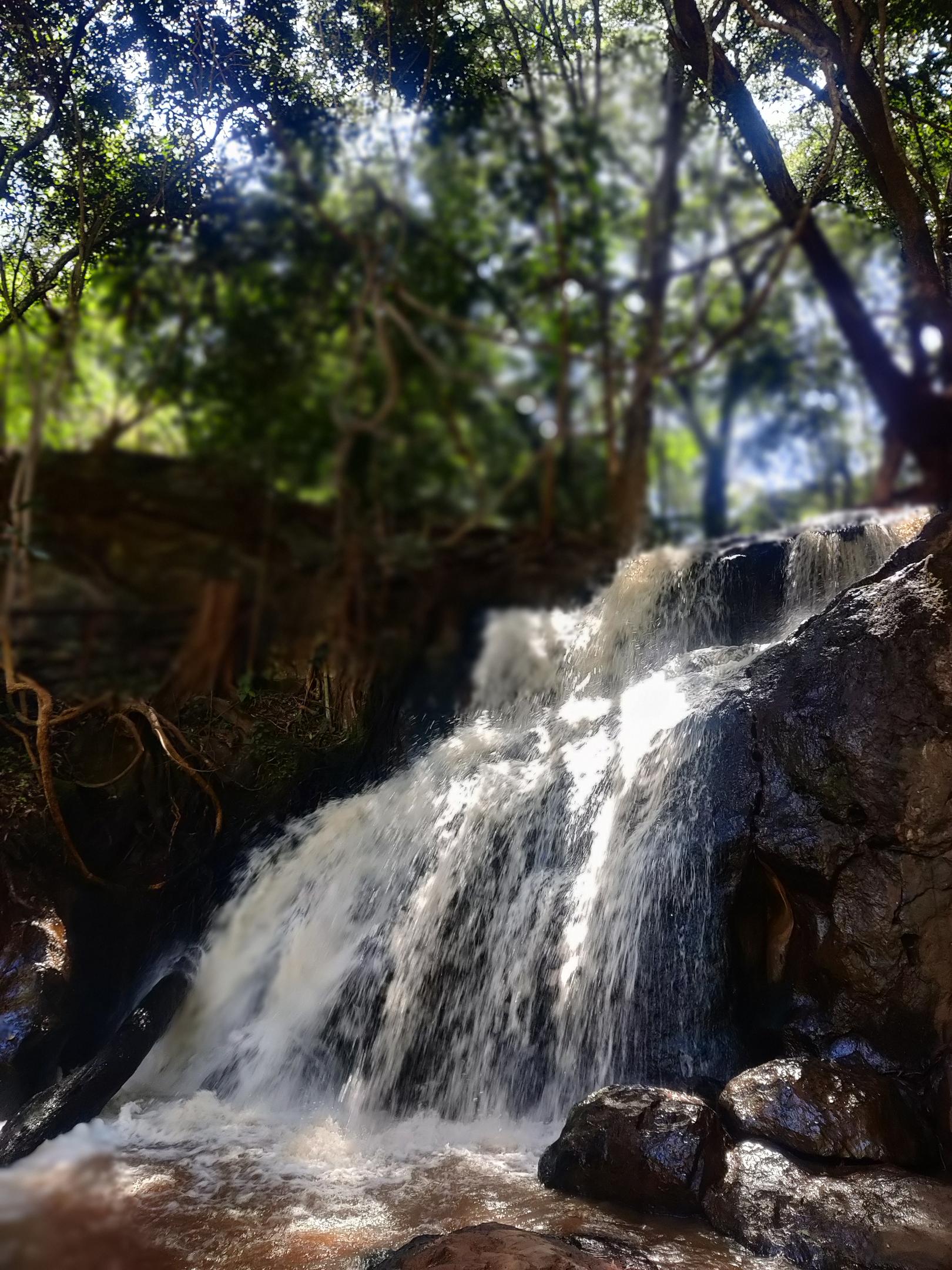
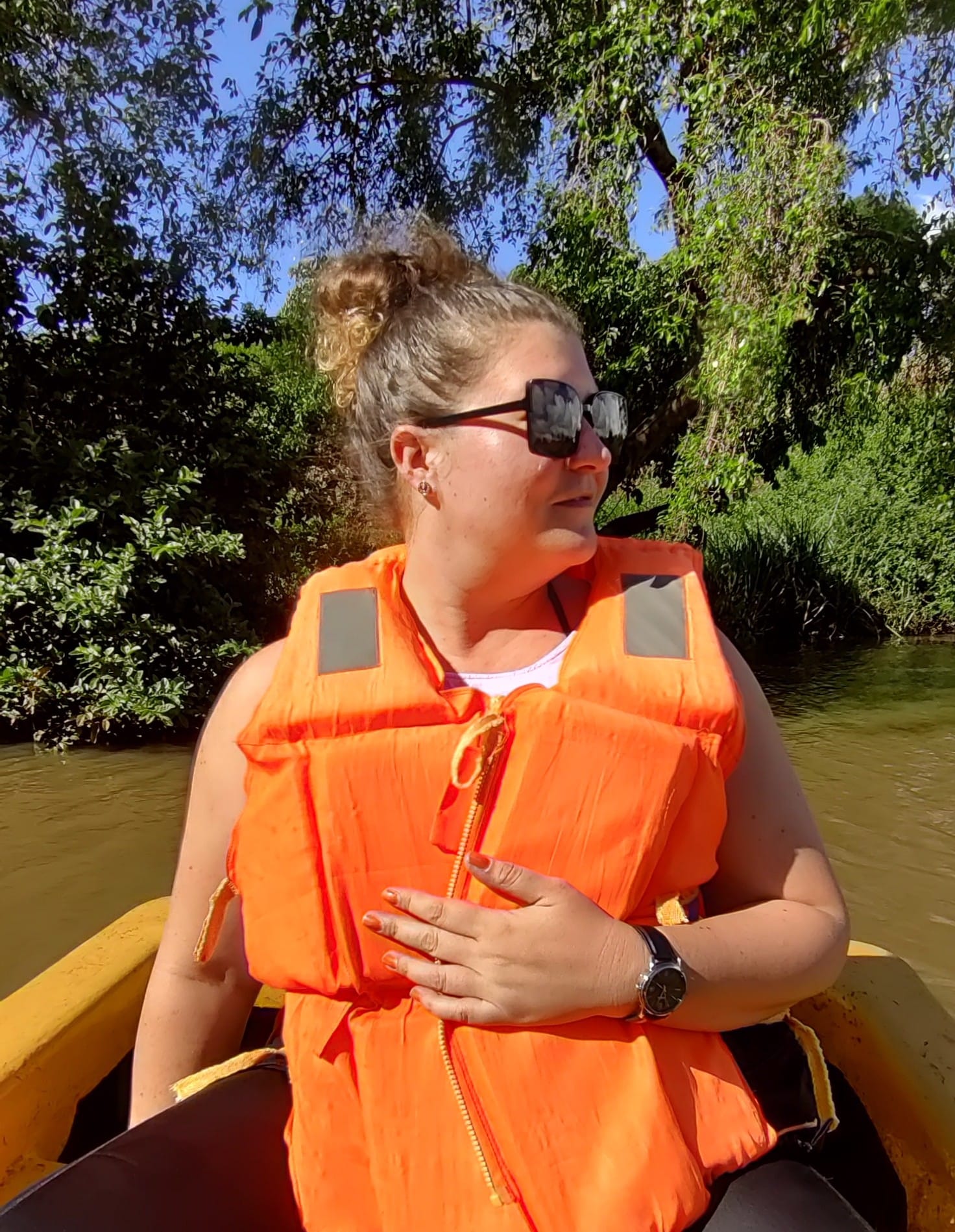
When Nairobi gets loud, drive north into Kiambu County. Paradise Lost is green and quiet and easy, with a boat ride and plenty to fill an afternoon. We camped there for a night and did the boat tour, and I’d do it again. A rental car is the way—this is not a place you want to be waiting for a ride back from.
Two things to know. All the activities are priced individually on top of entry, so bring more cash than you think you need. And prices differ between locals and foreigners, which is standard across Kenya and worth budgeting for rather than being annoyed about at the gate.
Ngong Hills: the ridge walk that makes sense of the whole city
Seven summits, a line of white turbines turning slowly along the spine, and a path that rolls up and down for hours. Rift Valley falling away on one side, Nairobi hazy on the other. It's about an hour out of town and it feels like four.
Do the whole traverse and you're looking at 12 to 14 kilometres of steady up-and-down at around 2,400 metres, which is more than the phrase "easy half-day" suggests once the wind gets going. Start early. The cloud comes in over the ridge by mid-afternoon and takes the view with it.
Here's the thing I'd actually push on: go with a guide. Not because the route is hard to follow — it isn't — but because the ridge has a history of muggings, and walking it alone as a woman is the one decision up there you can't undo. Rangers exist for exactly this reason, and every Kenyan I know says the same thing about doing it unaccompanied.
A guided Ngong Hills hike solves the rest of it too. Hotel pickup, so no rental car, no negotiating a ride back down from a trailhead with patchy signal. It costs less than dinner for two in Westlands, and it's cancellable free up to 24 hours before, so you can book it now and decide about the weather later.
Getting around Nairobi: transport, safety tips, and how cautious to actually be
Uber, Faras, and Bolt are the answer, and they’re cheap. Most cross-town rides land somewhere between KES 400 and 900. The main roads are decent, the traffic is not, so add an hour to anything you plan between 4pm and 7pm and stop trying to fight it.
Nairobi is generally safe in daylight in the areas you’ll spend time in. As a general rule I’m more cautious after dark than I am anywhere before it, and that’s most of the system. What I’d avoid: wandering alone at night, phone visible in your hand while walking, and cash spread across every pocket. My belt lives under my clothes on city days for exactly that reason, and the Alpha Keeper belt is what I’ve used for years. Stay aware, keep your bag on the inside shoulder, and bear in mind that safety advice for this city ages faster than most.
A few more things that apply across Africa travel generally, not just here. Pickpockets work crowded places: markets, bus stations, anywhere you’ve stopped to look at your phone. Carry your camera discreetly rather than slung across your chest, and don’t display wealth you don’t need to be carrying. Keep your original documents somewhere secure and move around with copies. Be cautious with strangers who are overly friendly very quickly, which is the opening move of most scams anywhere in the world.
In a car: doors locked and windows up in slow-moving traffic, and no driving at night in rural areas if you can avoid it. Power cuts happen, and when they do the traffic lights go with them, so junctions turn into a negotiation between everyone’s nerve.
Two more. Travel insurance is not optional for a trip like this, so get it before you fly. And ask before you photograph people. It costs you a sentence and it’s the difference between a portrait and a theft.
None of this is Nairobi-specific, by the way. It’s the same set of habits I wrote about in what solo female travel in Zanzibar is actually like, and the same ones I’d use in Lisbon or Bangkok.
Plenty of amazing things to do in Nairobi
Nairobi is not a city you tick off. It’s one you settle into for a few days (or longer like me, I love this city), get stuck in traffic, eat extremely well in, and leave slightly annoyed that you booked the Mara flight so soon.
Start with a Wednesday night in Kilimani. Work your way out from there. If you want to know who’s writing this and why, that’s here.
Things to do in Nairobi: your questions answered
What is the best month to visit Nairobi?
The best month to travel to Nairobi is July or August, inside the June-to-September dry season. Sunshine, cooler temperatures, and the best conditions for a game drive.
How much does it cost to visit Nairobi?
Budget USD 40 a day at the low end, 70 to 120 mid-range, and add USD 100 for any day that includes the national park and the elephant nursery.
How many days is enough for Nairobi?
If you ask me, no amount of days is enough for this stunning city. If you want to enjoy Nairobi to the fullest without a hustle, I would recommend a minimum of 7 days.
How to dress in Kenya as a woman?
Nairobi is a modern city and nobody will look twice at jeans, trousers or a moderate dress in Kilimani or Westlands. Cover shoulders and knees in older neighbourhoods, at the coast, and anywhere religious, and you’ll be fine everywhere.
Is Nairobi a good tourist destination?
Yes, absolutely. Nairobi offers the perfect mixture of nature, a small city safari, great food, cultural events and is the financial hub of East Africa.
Can Americans visit Nairobi?
Yes, Americans can visit Nairobi. Apply for the eTA online at etakenya.go.ke for USD 30. US citizens also have access to a five-year multiple-entry option at USD 185, which pays for itself fast if you’re coming back.
Is Nairobi expensive for tourists?
Food, drinks and transport are cheap by European or American standards, and cheaper than in most neighbouring countries. Wildlife entry fees and good hotels are not, and the gap between those two things surprises people regularly (including myself hehe).
Is it safe to go to Nairobi now?
Nairobi is generally safe with normal big city awareness. Conditions change, and protests do happen. Check your government’s current advisory and a couple of independent sources close to your travel dates rather than relying on any single guide, including this one.
What are the best day trips from Nairobi?
Paradise Lost in Kiambu County, Ngong Hills for the ridge walk, and Lake Naivasha or Hell’s Gate if you’re happy with a longer drive.
Can you do safaris from Nairobi?
You can do one without leaving the city. Nairobi National Park is a genuine safari with lions and rhino. Nairobi is also the departure point for flights and drives to the Mara, Amboseli and everything else.
Is Nairobi, Kenya worth visiting?
Yes, and I’d argue it’s the most underrated capital in East Africa.
How far does $20 go in Kenya?
That is about KES 2,600. For that you will get a decent lunch with a glass of wine, a full day of Ubers, or entry to Karura with bike hire and money left for lunch.