What to Wear in East Africa as a Woman: Beach, Town & Safari
What to wear in East Africa as a woman: a bikini on the beach, shoulders and knees covered in Stone Town and the villages, and the one scarf that saved my day. Plus a packing list for Zanzibar, Kenya and Tanzania that respects the culture and still looks good.

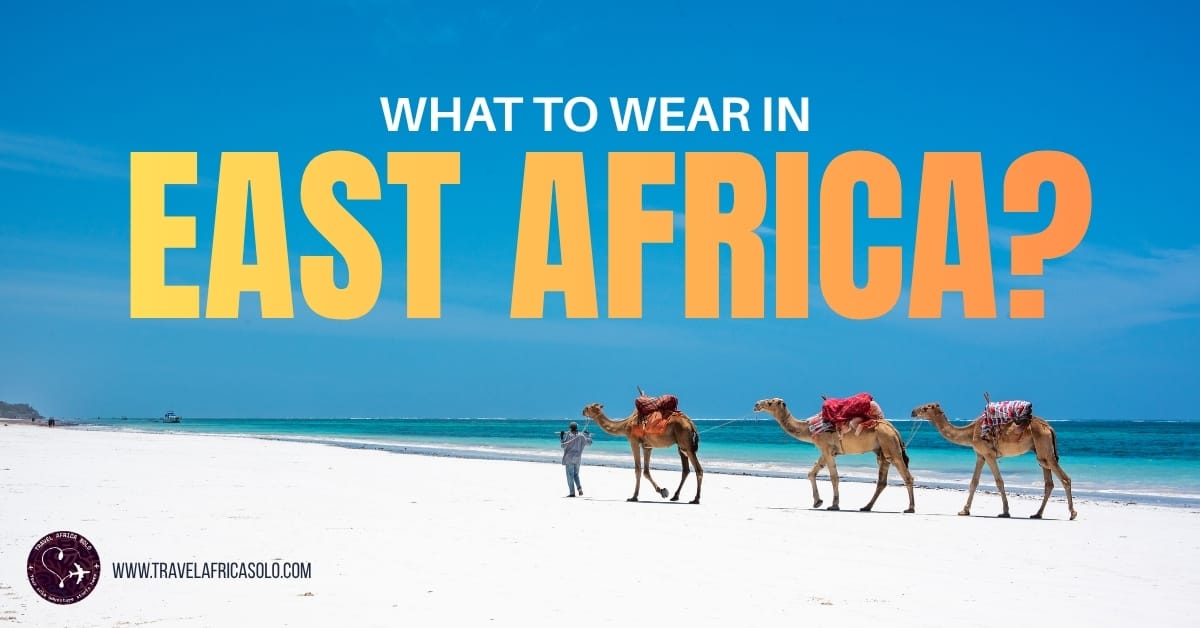
There's a scarf in my daypack that has seen more of East Africa than most of my shoes, and on one long beach walk it got me past a mosque without embarrassing myself or anyone else. That scarf is half the answer to the question of what to wear in East Africa. The other half depends on where you're standing: on the sand, in a village, in Stone Town or on a game drive.
The short answer: On the beach in Zanzibar or on the Kenyan coast, a bikini or swimsuit is completely fine, and so are shorts and tank tops. Topless is never okay, not even on the beach. In villages, in Stone Town, in Mombasa's Old Town and whenever you sit down for lunch in town, cover your shoulders and knees. Carry a scarf or sarong at all times so you can cover up in seconds when the setting changes.
If this is your first trip, read my guide on whether Zanzibar is safe for solo female travellers and the rest of my solo travel in Africa articles too. This one is the practical wardrobe part.
East Africa dress code at a glance
Here's how it breaks down across the East African destinations I've travelled, from the Zanzibar coast to Mombasa and Nairobi.
|
Where |
Fine to wear |
Cover up |
|
Beach
and hotel pool |
Bikini, swimsuit, shorts,
tank tops |
Never
topless |
|
Villages
behind the beach |
T-shirts, loose trousers,
long skirts |
Shoulders
and knees |
|
Stone Town and Mombasa Old
Town |
Loose,
breathable, long layers |
Shoulders and knees; nothing
see-through or skin-tight |
|
Lunch and dinner in town |
Same
as town |
Shoulders and knees, even at
midday |
|
Walking
past a mosque |
Sarong over shorts, scarf
over shoulders |
Shoulders
and knees |
|
Nairobi |
Jeans,
dresses, city clothes |
Nothing special; bring a
jacket for cool evenings |
|
Safari |
Khaki, olive, beige, long
sleeves |
No camouflage; avoid dark
blue and black |
Why modest dress matters in Zanzibar and on the Swahili coast
Zanzibar is Muslim, with the figure usually quoted at around 99 percent, and the Swahili coast of Kenya, Mombasa included, shares much of the same culture and faith. Modest dress there isn't a rule somebody invented to annoy tourists. It's simply how people live.
The official line backs that up. The US State Department describes the public dress code in Tanzania as conservative, especially in Zanzibar, and Zanzibar's code of conduct for visitors keeps swimwear and skimpy outfits to the beach and hotel grounds. In 2021 the island's tourism ministry went further and announced fines for indecently dressed tourists, reported at $700 and up.
So let's be clear about what covering your shoulders and knees means. It isn't old-fashioned, and it isn't submissive either. It's respect for the country, its people, their culture and their religion, because we're guests there. Full stop.
What to wear on the beach in Zanzibar and Kenya
Good news first: on the beach itself, you can relax. Wear a bikini or a swimsuit, whichever you prefer, and walk around in shorts and a tank top; bare shoulders and knees are completely fine on the sand and at your hotel.
The one hard line is topless sunbathing, and the answer is never. Not on a quiet stretch of sand, not at the pool, not for five minutes. Being German, I know that going topless barely raises an eyebrow on some beaches back home, which is exactly why I'm spelling it out here. East African beaches aren't private bubbles. Local women, children, fishermen and seaweed farmers use them every single day, and topless sunbathing is deeply disrespectful to all of them.
Still deciding where to base yourself? My overview of the best places to stay on Zanzibar walks you through the beach towns.
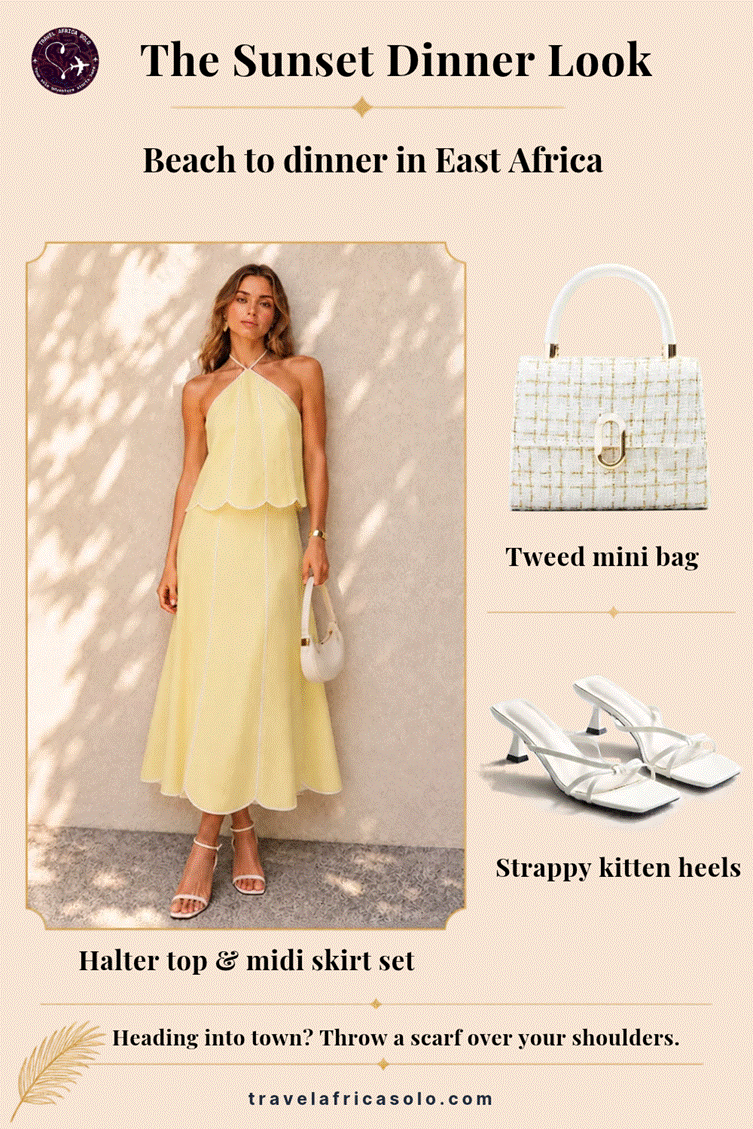
What to wear in Stone Town and the villages
The moment you leave the sand, the rules change. Walk inland from almost any beach on Zanzibar and you'll pass signs at the village entrance asking visitors to dress respectfully, which in practice means shoulders and knees covered. Those signs mean it.
Stone Town works the same way, only more so, and so does Mombasa's Old Town on the Kenyan coast. That includes going out for lunch. A beach bar on the sand is the beach, but a café in town at midday is town, heat or no heat.
Real talk, the way some tourists dress in Stone Town shocked me. People wander through the old town as if they'd never left the pool, past homes and mosques, with no thought for the culture or religion of the people who live there. Some clearly hadn't read up before they came, and some knew and did it anyway. That second group is the one I have zero patience for.
What respectful clothing looks like in practice
Think loose and long rather than covered head to toe: wide-leg trousers, a maxi or midi skirt, a dress with sleeves or a T-shirt over it, nothing see-through and nothing skin-tight. Linen and cotton are your friends in 30-degree humidity, and loose fabric keeps you cooler than shorts because the sun never hits your skin directly. (Bonus: a loose dress hides an Alpha Keeper money belt completely.)
Respectful doesn't mean frumpy, by the way. The pieces that earn their space in a bag here are wide-leg linen trousers, a flowy maxi dress and an oversized linen shirt that goes over a swimsuit on the walk back from the beach and over a tank top in town. You'll look put together all day.
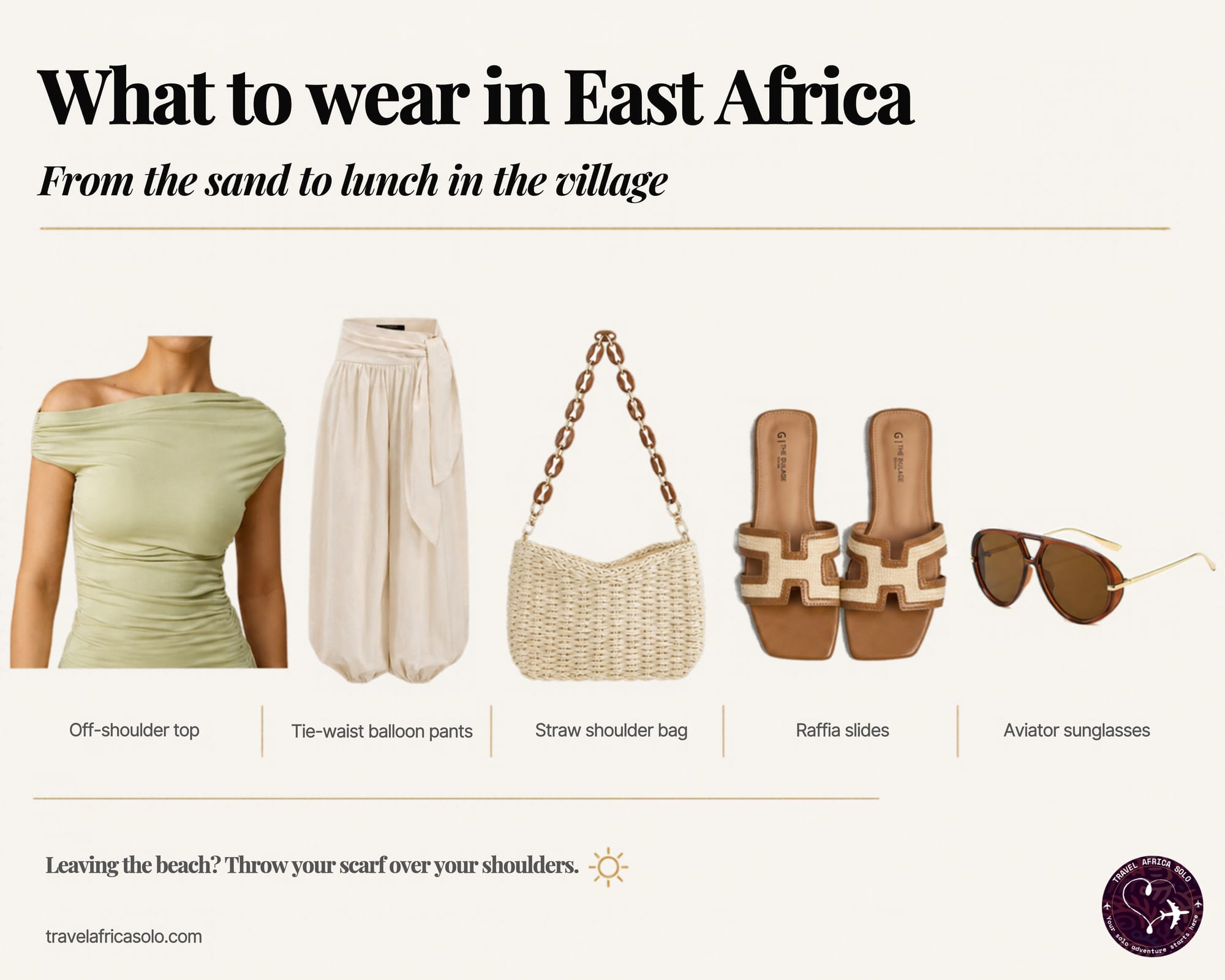
The one thing I never travel without: a scarf or sarong
There's always a scarf or a sarong in my bag. Always. It goes over my shoulders when I walk into town, around my hips when I'm in shorts, and over my head and neck when the midday sun gets brutal, because it's excellent sun protection too.
Here's the moment it earned its place for good. I was on a long beach walk in shorts and a T-shirt when I realised my route would take me past a mosque that stood right on the beach at the coast north of Diani, Kenya. So I wrapped the scarf around my hips, walked past dressed respectfully, and that piece of fabric saved my day.
What to look for: a sarong or scarf big enough to wrap around your hips and reach below the knee (roughly 100 x 180 cm), lightweight cotton or viscose that dries fast and folds small, and fabric that isn't see-through when the sun is behind you. This is the scarf I'd pack.
East Africa packing list for women
This is the capsule wardrobe I'd pack for two weeks between the coast, the cities and a safari. (If you're still budgeting, here's what a two-week trip to Africa costs.)
• Two pairs of loose trousers, linen or wide-leg (shop here)
• One or two maxi or midi skirts or dresses (shop here)
• An oversized linen shirt as a cover-up (shop here)
• T-shirts with sleeves; save spaghetti straps for the beach
• A bikini or swimsuit for the beach and pool (shop here)
• A large scarf or sarong (my pick)
• A light cardigan or packable jacket for Nairobi and safari mornings (shop here)
• Walking sandals that handle sand and uneven old-town streets (shop here)
• An Alpha Keeper money belt that disappears under a loose waistband
• Packing cubes instead of plastic bags (shop here)
That last point isn't about tidiness. Kenya and Tanzania both ban plastic bags, and Tanzania asks air passengers to hand theirs over on arrival (zip-lock bags for liquids at airport security are fine), so pack your clothes in cubes or fabric pouches instead.
What to wear on safari and in Nairobi
Safari is a different wardrobe question. Neutral colours like khaki, olive, beige and sand are the standard for a reason: dark blue and black attract tsetse flies, and bright white turns dusty within the hour. Leave anything camouflage at home, because in Tanzania camouflage is reserved for the military, and civilians wearing it risk a fine and having it confiscated. Early game drives are cold, so bring a light jacket you can peel off later.
Nairobi catches people out in a different way. The city sits at around 1,800 metres, so evenings get properly cool, especially from June to August, and the dress code is far more relaxed than on the coast. City clothes work fine. Heading there? Here are 15 things to do in Nairobi to plan your days around.
Don't skip travel insurance
No outfit fixes a lost bag, a stomach bug in Stone Town or a twisted ankle on an old-town step, so sort your insurance before you fly. Genki is my pick for longterm trips up to 12 months. You can also cancel after the 1st month.
If modest dress feels like a problem for you
Let me be direct here, because this matters to me. If covering your shoulders and knees in a village or in Stone Town feels like too much to ask, then Zanzibar, Mombasa, Kenya, Tanzania and East Africa in general shouldn't be your destination, and that's fine, the world is big.
What isn't fine is going anyway and ignoring the rules on purpose, complaining about them to the people who live there, or not bothering to look them up before you land. That's an absolute no-go.
We're guests in East Africa. If you can't dress for that, it isn't the destination for you.
If you've read this far, you're probably not that person. Pack the scarf. Everything else is detail.
Want more practical guides like this before your trip? Join my newsletter and I'll send new ones straight from the road. And if you're still working up the nerve to go, my Solo Africa Confidence Kit is where I'd start (you'll get it with the newsletter, too).
FAQ: What to wear in East Africa
Can I wear shorts in Zanzibar?
On the beach and at your hotel, yes. In Stone Town and in the villages, wear trousers or a skirt that covers your knees, or wrap a sarong around your hips over your shorts.
Can I wear a bikini in Zanzibar?
Yes, on the beach and at hotel pools. Cover up with a sarong or shirt before you walk into a village or town. Topless sunbathing isn't acceptable anywhere on the island.
What should women wear in Stone Town?
Loose clothing that covers your shoulders and knees: wide-leg trousers, maxi or midi skirts, dresses with sleeves and T-shirts. Avoid see-through and skin-tight pieces, including when you go out for lunch.
Do I need to cover my hair in Zanzibar?
No, visitors aren't expected to wear a headscarf in town. Shoulders and knees are what matter. Keep a scarf handy in case you visit a religious site.
What should I wear in Kenya?
In Nairobi, normal city clothes plus a jacket for cool evenings. On the coast, including Mombasa's Old Town, follow the same modest dress code as Zanzibar and save swimwear for the beach.
What colours should I avoid on safari?
Dark blue and black, which attract tsetse flies, and anything camouflage, which civilians aren't allowed to wear in Tanzania.